Machine Translation for Technical Manuals and CE Instructions
Machine translation is a useful draft
If you already use machine translation, you do not need to be told that the tools are bad. DeepL, Google Translate and similar engines produce a readable draft quickly, and for many jobs that draft is the right tool.
The requirements change with the job. A text you only read yourself, a manual a customer will follow, and instructions supplied with CE-marked machinery are three different uses. Each one asks something extra of the translation.
How we handle manuals is described on the technical translations page.
When a machine translation draft is enough
Machine translation is a sound choice when the goal is to understand a text. A supplier email, a foreign quotation, or a standard you want to follow in outline does not have to be a finished publication. You can judge an odd sentence because you still have the source. Nobody outside your company will rely on the wording.
A machine draft is also a fair first step inside a technical translation. Many projects start that way. It stops being sufficient when it is formatted, published and sent out as the finished document, with nobody left who has compared it to the source and to the product.
Machine translation for a technical manual
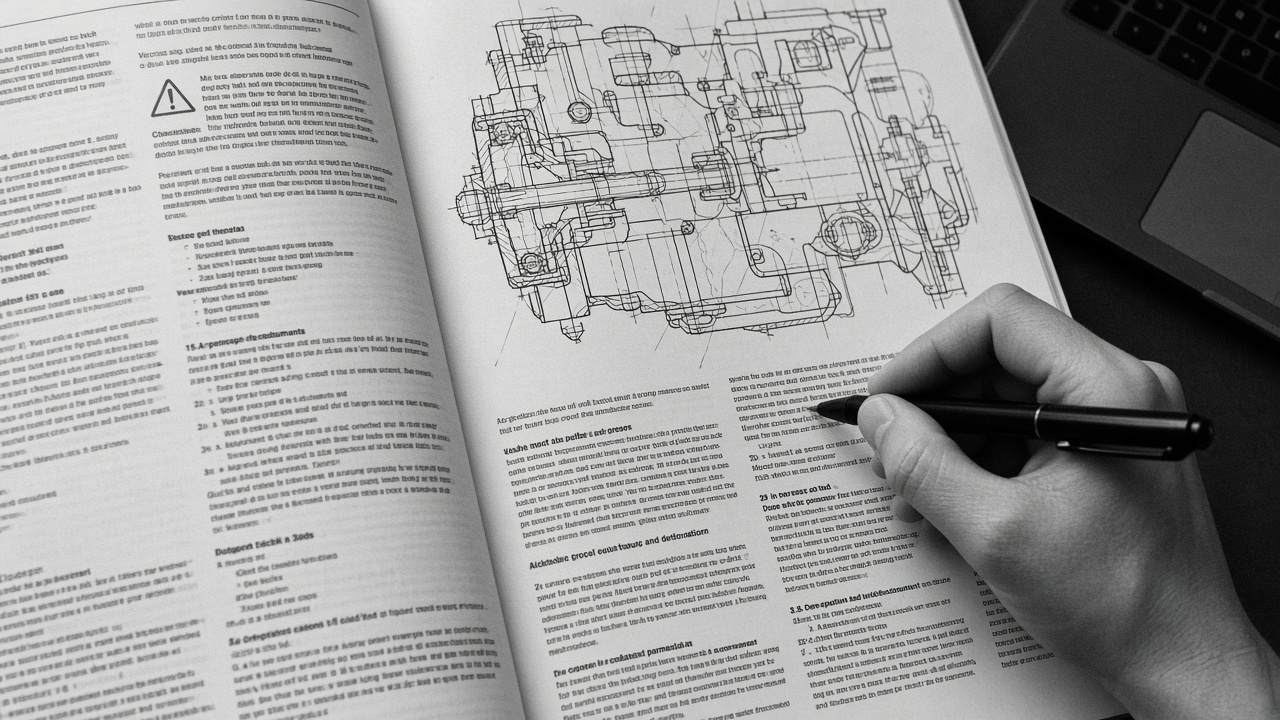
The extra requirements start when a customer, a service technician or an inspector will rely on the text. An instruction manual has to keep the order of the steps, the part names, the values and the conditions. A fluent machine translation can hide a reversed condition, a missing “not”, or a part that has one name in the assembly chapter and another in the spare-parts list.
For a published technical manual, add these requirements to the draft:
- One term for one part, across the whole manual and later revisions. A machine translation starts again at each file, so the same component can change name halfway through the book.
- Safety instructions checked against the source. A warning that reads well and says the wrong thing is worse than a sentence that is obviously broken.
- Figures, item numbers and software strings left as they are. A fluent rewrite breaks the link with the drawing or the screen.
- A question when the source is unclear. If the original can be read in two ways, a person can ask which reading matches the machine. An engine picks one and continues.
That last requirement is the one machine translation cannot meet. The tool has finished when the file comes back. If a distributor later writes that a torque, a warning or a sequence does not match the product, there is no author of the translation to correct it.
CE marking: language requirements for the instructions
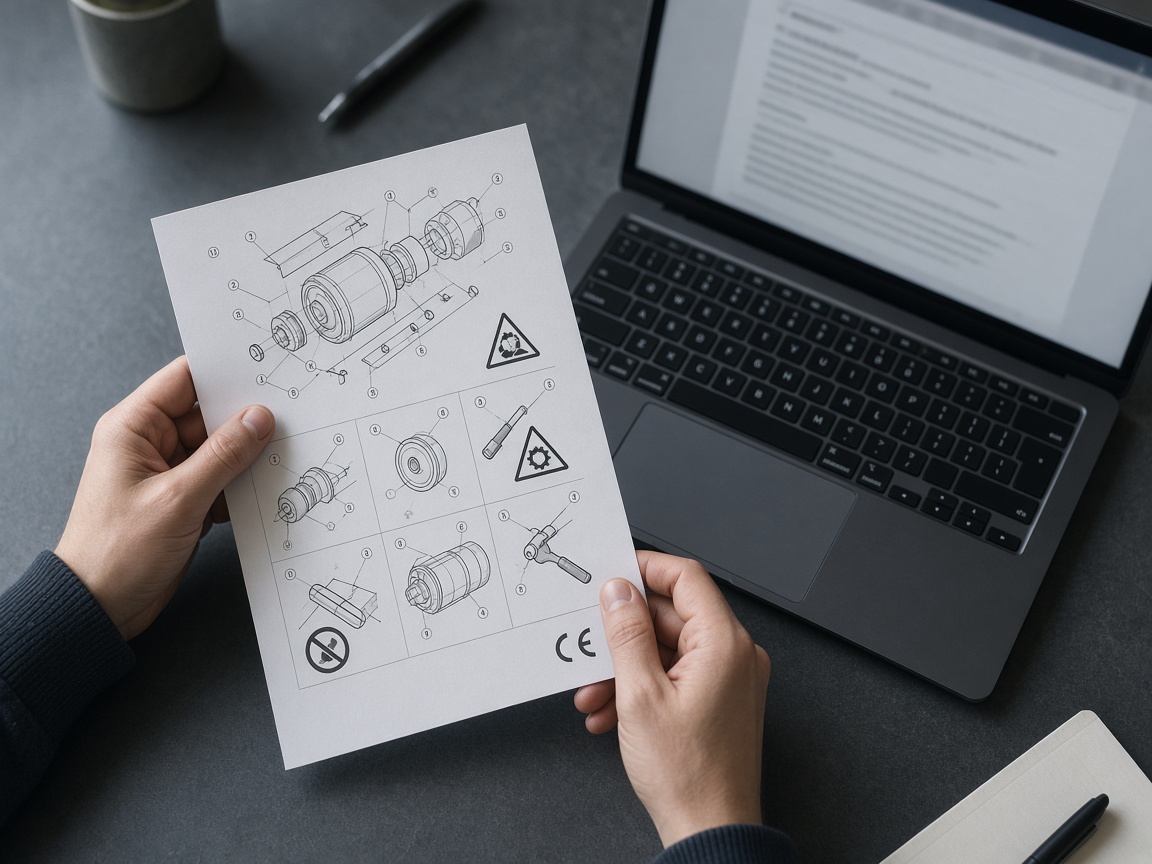
The requirements are stricter when the manual is part of placing machinery on the market. Under the Machinery Directive, machinery must be accompanied by instructions in the official language or languages of the Member State where it is placed on the market or put into service. Those instructions are either the “Original instructions”, on the language version the manufacturer or authorised representative has verified, or a “Translation of the original instructions”. The translation has to carry those words, and it has to be accompanied by the original instructions.
Where no original exists in the language of the country of use, the manufacturer, the authorised representative, or the person bringing the machinery into that language area has to provide the translation. A machine-translation account does not know which country you ship to, and it does not become that person.
The EC declaration of conformity follows the same language conditions as the instructions. A translation of the declaration has to keep the structure of the original. A smooth paragraph that drops a particular, a standard reference or the identity of the signatory is not a declaration you can supply.
CE marking stays with the manufacturer. A translation service does not affix the mark and does not take over the technical file. What you still need, if the original is not in the language of the destination country, is a translation that can be supplied as the instructions for that country, consistent with the original, and traceable to a delivered version.
From 20 January 2027 the EU Machinery Regulation takes over this field. Instructions for use and safety information still have to be in a language easily understood by users, as determined by the Member State, and they have to be clear, understandable and legible. Digital instructions are allowed under conditions. The language requirement remains, and someone still has to accept the text that is published.
Other documents you supply in a local language
A safety data sheet placed on the EU market has to be supplied in an official language of the Member State, unless that state provides otherwise. The headings are standardised, so a machine translation looks convincing. The supplier of the substance or mixture remains the party who supplies the sheet.
Consumer products raise the same point for safety information and instructions: a language the user in that country can actually use. Pasting a machine translation under a product in a web shop moves the tool from private reading to a published safety text. That is where the translation needs an owner.
What a technical translation service takes on
For a manual, a declaration or a safety data sheet supplied with the product, a translation service takes responsibility for the translation it delivers. That means reading the source, asking when a sentence does not match the product, keeping terms stable, labelling a translation of the original instructions as such, and handing over a named version. If a sentence is later disputed, there is a party who can correct it.
Machine translation can sit inside that work. Post-editing a machine draft is a fair route for some technical texts, if the editor is accountable for the whole document and not only for sentences that sound odd. For safety instructions, CE manuals and declarations of conformity, a light language polish is a weak match. Those texts need a translation someone will own.
Use the tool for the job it can finish
Keep using machine translation to understand a source or to move an internal discussion along. When you use it for a manual, a warning, a declaration of conformity or a safety data sheet that will be supplied in a particular country, add the requirements of that use: the official language, the words “Translation of the original instructions” where the machinery rules require them, a check against the source, consistent terms, and a person or a service that accepts the finished document.
The engine can produce the draft. It cannot take responsibility for the document you supply with the product.
This page is general information for manufacturers and exporters, not a conformity assessment. The duty for a given product depends on the legislation that applies to it and on the country of supply.
Questions about machine translation and technical documents
Can I use DeepL or Google Translate for a user manual?
Yes, when you only need to understand the manual. Once that text is the manual you supply to a customer, it needs a check of the steps, the part names and the warnings, and someone who can correct it later.
Does machine translation meet the CE language rules?
The Machinery Directive requires instructions in the official language of the country where the machine is placed on the market, either as original instructions or as a translation of the original instructions. A generated file does not by itself meet that duty, and it does not take CE marking away from the manufacturer.
What is a translation of the original instructions?
It is the translation supplied when no original instructions exist in the language of the country of use. It has to be marked with those words and accompanied by the original instructions. The declaration of conformity is translated under the same conditions.
When is post-editing of a machine translation enough?
When a specialist editor is accountable for the whole document, not only for sentences that sound odd. For safety instructions, CE manuals and declarations of conformity, a light language polish is a weak match.
Need the manual owned, not only drafted?
We translate technical manuals, safety instructions and CE documentation, and we will tell you when a machine draft with post-editing is enough. See the technical translations page, or learn more about our translation service. Phone +31 416 353 512 or email info@stse.nl.